

More about: Best Things to Do in Zaragoza
Every corner of Zaragoza tells a story that will fascinate you. You can lose yourself in its narrow streets and experience Aragonese culture, whether by taking a Spanish cooking class or visiting olive oil plantations. If there's one thing this city has, it's charming monuments such as the Aljafería Palace, the Roman Theatre and La Lonja.
I recommend setting aside a couple of days to immerse yourself in a historical tour of Mudejar and Roman influences and events such as the Inquisition. This gem awaits you with delicious tapas accompanied by the street art of Calle El Tubo. If you are travelling with children, be sure to explore the city's aquarium and enjoy a ride on the tourist bus. Overall, Zaragoza is the destination you imagine in your head when you're looking for history, gastronomy and art.
1. Discover the essentials on foot

The best way to discover the charm of this city is to lose yourself in its streets and passageways, where you will encounter fascinating stories dating back 2,000 years. Zaragoza could be considered the city of four cultures because it has preserved buildings from different periods and civilisations.
There are so many places to see that many people choose to book a guided tour of Zaragoza. I think it's a great way to explore the fusion of cultures throughout its history.
Roman Theatre of Caesaraugusta
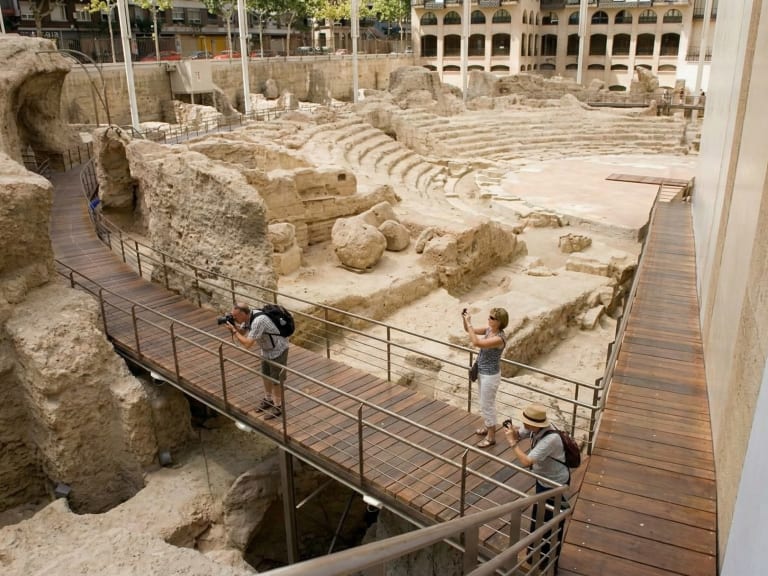
A must-see in Zaragoza is the Roman Theatre of Caesaraugusta, a remnant of the Hispano-Roman era in the 1st century AD that has been converted into an impressive museum. It is one of the largest in Spain and was once a feat of engineering due to its capacity to hold up to 6,000 people.
It will remind you a little of the ruins of the Theatre of Marcellus in Rome, and you can visit the interior via walkways and interactive exhibitions. Take a close look at its system of vaulted galleries and the pit beneath the stage.
Basilica of Our Lady of the Pillar
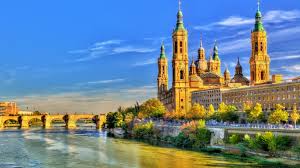
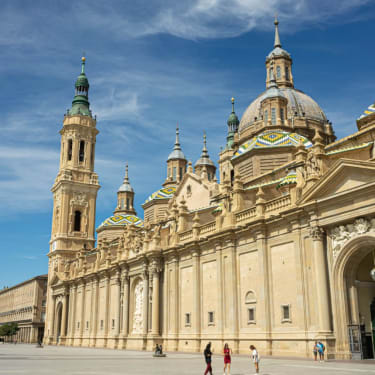
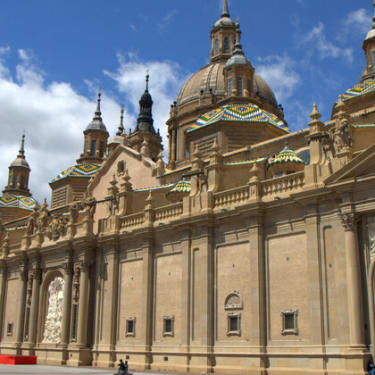
As you walk through the streets of Zaragoza, you may find yourself gazing at the Basilica del Pilar, one of the most spectacular and oldest in Spain. According to legend, its name originated because the Virgin Mary appeared to the apostle James in 40 AD and left him a pillar as proof, as well as a request to build a church in her name.
Today, it is an example of Baroque architecture and you can see its four towers, eleven domes and the main altarpiece made of alabaster. Here you can enjoy the Fiestas del Pilar every 12th of October, which reflect religious fervour with processions, concerts and fireworks.
Seo del Salvador
The Cathedral of El Salvador is an iconic monument in Zaragoza. You will love it because it was built on the site of an old mosque and will captivate you with its characteristic Aragonese Mudejar architecture.
2. Visit the Aljafería Palace
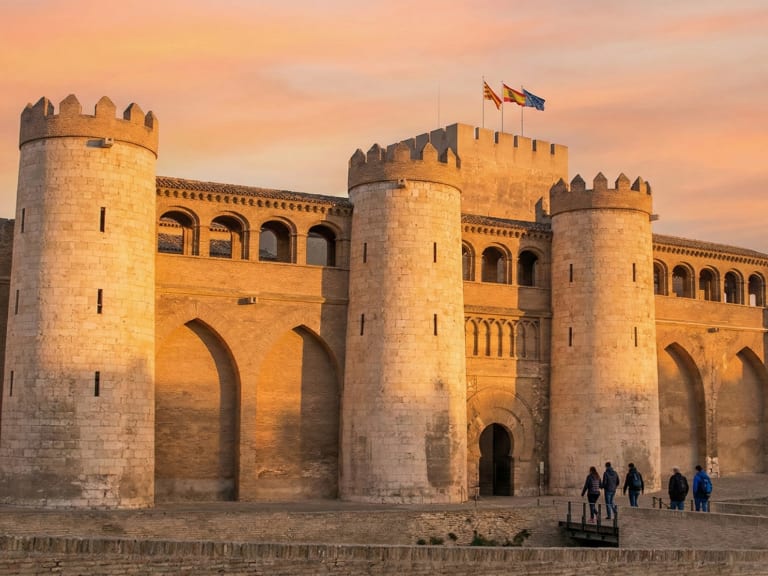
The Aljafería Palace is one of the few examples of Hispano-Muslim architecture in Spain, with a façade and history as spectacular as the Mosque of Córdoba and the Alhambra in Granada. When you visit it, you will feel as if you are travelling through Islamic, Mudejar and Renaissance culture, and you will discover the former recreational residence of the Muslim kings of the Taifa.
Over the years, it has served different purposes, from being a fortress to the headquarters of the Inquisition. Its interior is eye-catching, with its original arches and the stunning beauty of the Islamic courtyard of Santa Isabel.
Take your time and be sure to visit the Troubadour's Throne, the oldest part of the palace. If you would like to visit this palace and discover other hidden treasures of the city, you can book a private tour of Zaragoza. This type of experience allows you to customise an itinerary according to your interests and immerse yourself in interesting stories.
3. Immerse yourself in historical tours
Zaragoza has significant sites from various historical periods, and you can organise an itinerary to discover the stories and buildings that left their mark. From the Inquisition to the Mudejar period, you can discover it on your own or sign up for a private tour and customise it to your liking.
Zaragoza during the Inquisition
Some of Zaragoza's buildings and streets are your ticket to the darker nuances of the past. Although during the Inquisition the city became a religious and cultural centre, it was also a tool of ideological control that unleashed the persecution of those who thought differently. In fact, many were accused of heresy and severely judged.
As I mentioned, for a long time the Aljafería Palace was the headquarters of the Inquisition, where atrocious plans were devised. However, there are other important stops to understand this period:
- Calle de los Predicadores.
- Puerta de Toledo.
- Goya Museum.
Roman Zaragoza
Roman Zaragoza, or Caesaraugusta, left an architectural legacy that is well worth seeing. From the Roman Theatre to the walls and the forum, every corner bears witness to the splendour and opulence that marked the city's beginnings. At that time , the thermal baths, the archery ranges (although only ruins remain in this city) and the impressive exhibitions in the Forum Museum were famous.
Mudejar Zaragoza
The Mudejar influence can still be seen in the cuisine, architecture and art. In fact, if you pay attention, you will notice that many streets and monuments have patterns and ceramics typical of this period. And although it is difficult to imagine, there was a time when it was known as Medina Albaida (the White City) because all its houses were made of plaster and lime.
Although this did not prevail over time, you can still appreciate the Hispano-Muslim style that transformed the old town, as well as its palpable charm in the La Magdalena neighbourhood.
4. Enjoy a Spanish cooking class and visit the local market
If you would like to connect with the country's culinary culture, sign up for a Spanish cooking class! Before putting on your apron, you will visit the colourful Zaragoza Market for a rewarding experience, where each stall offers fresh produce such as cereals and fish freshly caught from the sea.
You'll have plenty of time to learn the techniques of cutting Aragonese meat, as well as the tricks that the people of Zaragoza use in their kitchens. The class is organised for small groups, so that everyone can share the space and participate by cutting, mixing and cooking together.
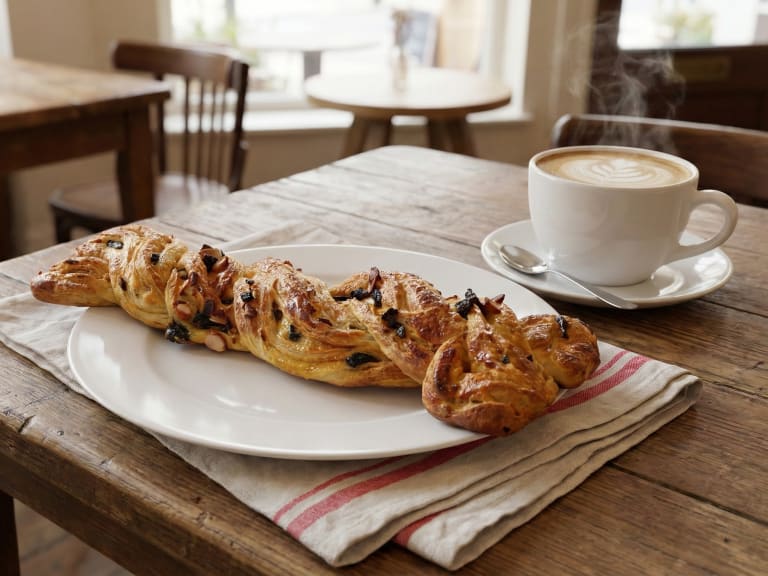
During the experience, you may make new friends who also enjoy cooking, and at the end, you will sit down together to taste your own creations, savouring every bite with a glass of wine. The menu is usually varied and depends on seasonal produce, but I can tell you that among the most famous dishes of the local cuisine are borraja con patatas (borage with potatoes) and desserts such as trenza de Almudévar (Almudévar braid).
I assure you that you won't regret booking a Spanish cooking class with a tour of the Zaragoza market. Not only will you learn the recipes, but you'll also connect with the region's gastronomic traditions and take a little piece of Aragon home with you.
5. Don't miss the Zaragoza Aquarium
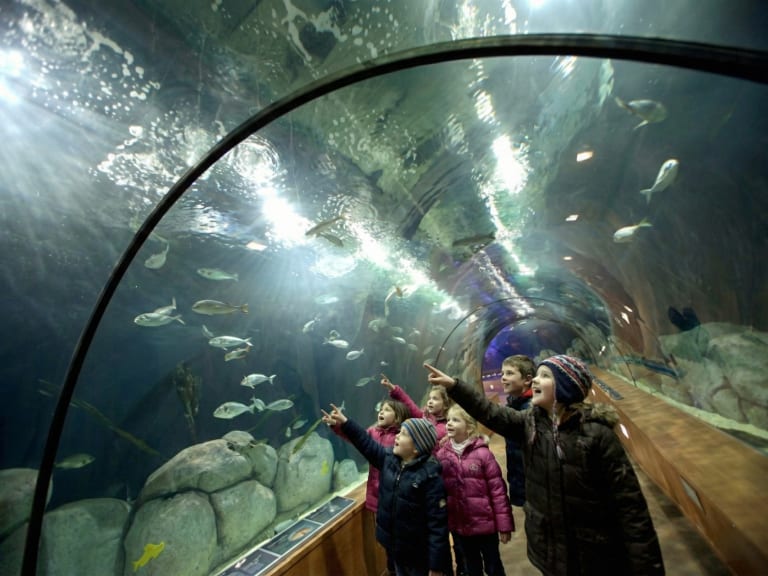
Another attraction you should sign up for is the Zaragoza Aquarium, an unmissable family outing. It is home to more than 5,000 animals from around 350 different species in 70 aquariums and aquaterrariums. Each area has the necessary conditions for the survival of species from the world's most important rivers: the Nile, Mekong, Amazon, Murray and Ebro.
In fact, one of its main attractions is the simulation of a river in the central part, where otters, sharks and Nile crocodiles are concentrated. In general, it has different animals and educational activities such as workshops on reptiles and the possibility of diving with animals.
Buying tickets for the Zaragoza Aquarium in advance guarantees you skip-the-line access, and you only have to choose the day and time of your visit.
6. Delight in the local cuisine at El Tubo

You'll probably pass through Calle El Tubo a couple of times, where you'll be enchanted by the street art and restaurants serving up delicious food. It's always bustling with life and its terraces are perfect for taking a break from the hustle and bustle. What's more, it's impossible not to stop and peer into the display cases of the bars, as the tempting aromas of freshly prepared tapas invite you to enter each of the gastronomic stalls that dot the area.
Here you should try the Aragonese migas, cod meatballs and torrijas. Although this is the gastronomic area par excellence, Zaragoza will surprise you with its offerings in other places such as Calle Coso, Plaza del Pilar and the Zaragoza Market.
It is highly recommended to book a gastronomic tour of Zaragoza because a local expert will give you recommendations on what to eat and where. You will enjoy it a lot because it usually includes tapas and drinks tasting.
7. Discover La Lonja de Zaragoza
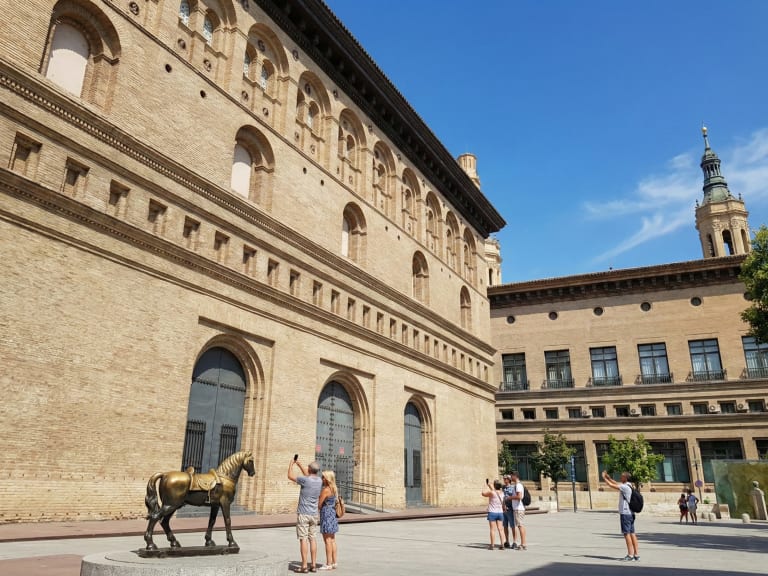
La Lonja de Zaragoza is an art gallery that offers several exhibitions completely free of charge. In the past, it was used for clandestine trade and had a secret floor that functioned as an armoury. You can visit it even if you are only planning to stay for a short time, as it will be a quick but rewarding visit, ideal for immersing yourself in the secrets of local history.
Keep in mind that most exhibitions are temporary, so it's difficult to predict what surprises await you. Nearby is El Caballito de La Lonja, a must-see photo spot with a moving history that you can discover if you visit the area with a guide or a local.
8. Hop on the Zaragoza tourist bus

Comfort comes first, so you should look for different options to get around the city quickly and efficiently. The Zaragoza tourist bus has a day and night route that will be very useful during your holiday.
An interesting fact is that when you book the day tourist bus, you have to buy separate tickets for the night tour if you also want to join the night tour. However, tickets for the night tour do include the day bus in their price. My recommendation, therefore, would be to go straight for the night tour, which is a two-in-one deal.
You can book it online and redeem it at any of the Zaragoza Tourist Offices or wait and buy it directly on arrival.
Daytime route
The daytime route offers 16 free stops so you can organise a tailor-made itinerary. You have the option of staying on the full 90-minute tour and listening to the informative commentary on the on-board audio guide, or taking your time to stroll around the city at your own pace. Just bear in mind that once activated, you will have 24 hours to enjoy the service.
Among the highlights are:
- Paseo Echegaray, near the Basilica del Pilar.
- Calle de los Diputados, near the Aljafería Palace.
- Plaza de España.
- Paseo Cuellar.
- Plaza de la Seo.
- Paseo Pamplona.
Night tour
The night tour does not include any stops and is a 65-70 minute ride with informative commentary on board. In general, this tour is ideal for experiencing the charm of Aragonese nights and discovering how they light up. You will see:
- The Lonja de Zaragoza.
- The famous Don Jaime I street.
- The Stone Bridge.
- The Paseo de la Independencia.
9. Discover the secrets of olive oil in Belchite

The region of Aragon is famous for its olive oil production. That's why, just forty minutes from Zaragoza, Belchite awaits you with an enriching experience. Here you can immerse yourself in the centuries-old olive groves, famous for their black olives, or stop at the plantations to learn about the extraction process.
Olive oil is not only an excellent condiment for meals, it also has cosmetic uses. So during this visit you can learn how it is transformed into everyday products. In addition, it is possible to actively participate in the production of the oil or learn how to pair oils with different foods.
This is the perfect opportunity to stop in the village of Belchite, which will enchant you with its history, ruins and vestiges of the Spanish Civil War. Bear in mind that the Old Town is home to all the old, abandoned and ruined buildings, while the New Town is a testament to Spanish resilience.
Although it is very close to the city and you can go on your own by bus
HIFE S.A, it is more convenient to book an excursion to Belchite from Zaragoza, which usually includes transport and a delicious olive oil tasting.
10. Visit the Cartuja Aula Dei
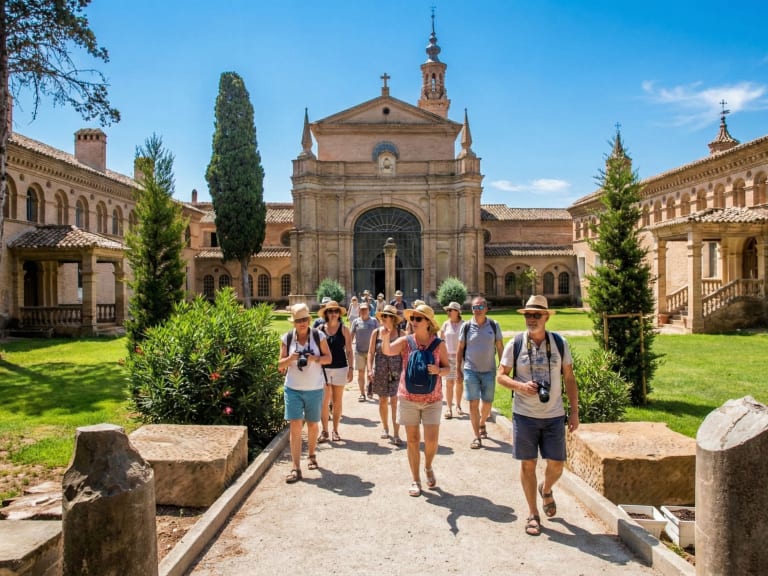
If you would like to get out of the city, consider a visit to Cartuja Aula Dei, a monastery of Mudejar and Gothic architecture that has had various uses throughout history. The original structure was designed by Hernando de Aragón in 1563, but it was seized from its owners during the confiscation of 1835.
Today, it is worth taking a look at the church, which has a spectacular cloister and a beautiful courtyard. It is also surrounded by spectacular walls, and guided tours are offered every Saturday, usually at 10:00 and 11:30, given by the Chemin Neuf Catholic community.
You can also appreciate some of Francisco Goya's most impressive works and request the musical audio guide, which will help to create an eclectic atmosphere. Of course, you cannot miss visiting the monks' cells, equipped with amenities such as a chapel, dining room, bedroom, study, workshop, and vegetable garden. You will not regret this experience, and it is easy to get there with the Zaragoza Avanza bus line 28.