


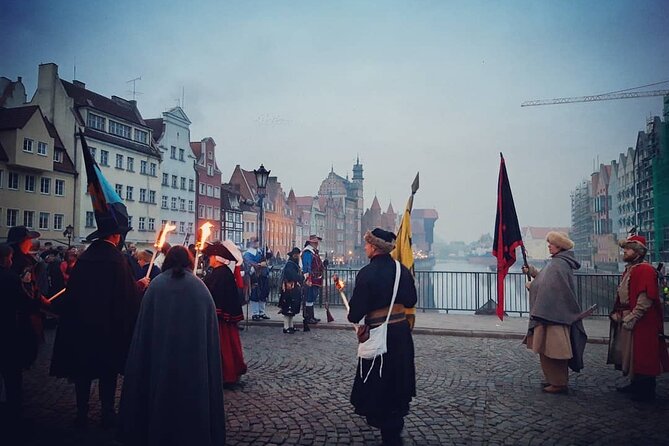
More about: 10 Things to Do in Gdańsk
If you are planning to visit Poland, you should know that this country has much more to offer than its capital Warsaw and imperial Krakow. Gdansk is one of its most important cities, and its medieval charm is complemented by its tradition as a port town and a wealth of museums and cultural attractions.
Among the best activities you can do in Gdansk are visiting St. Mary's Catholic Basilica, taking a cruise on the Motlawa River, visiting the Museum of the Second World War, discovering Westerplatte, or visiting the Stutthof concentration camp, located on the outskirts of the city a few kilometres from its historic centre.
1. Visit St. Mary's Basilica

St. Mary's Basilica is one of Gdańsk's most iconic architectural landmarks. Its construction began in 1343 and continued for several centuries, although it was severely damaged during World War II. Restored after the city's recovery, it is now one of the largest brick churches in the world.
Inside the Gothic basilica, you will find a carved wooden high altar, works by Flemish painters and stained glass windows depicting scenes from the Bible. The basilica also has a 78-metre-high tower, which offers panoramic views of the city and the port, making it a popular attraction for tourists.
There are also several places of interest near this church that complement the visiting experience. Among these attractions are the Green Gate, the Glowne Miasto neighbourhood with its cobbled streets and cafés, and the Neptune Fountain, one of the symbols of the city. This is why the basilica is included in the itinerary when you book a guided tour of Gdansk.
2. Take a cruise on the Motlawa River

Gdansk is a port city, and cruising the Motlawa is one of the best ways to explore this destination and its surroundings. This river offers panoramic views of the city's architecture and history from a unique perspective. During the tour, you will see the colourful buildings of the old town, the facades of the Long Market and the activity of the boats leaving or arriving at the port.
One of the highlights of the tour is the iconic Gdansk Crane, a medieval structure dating back to the 15th century. This old port, which used to be used for loading and unloading goods, is a symbol of the city's commercial importance in the Hanseatic League.
When you book a cruise on the Motlawa in Gdansk, you will have the opportunity to see the new part of the city. You will also be able to see cafés and restaurants with outdoor terraces, where locals and tourists enjoy the vibrant atmosphere of Gdansk. In addition, the river circuit is adorned with sculptures and green spaces, which you can visit on tours that include stops at these sites.
Although this experience is available throughout the day, cruises on the Motlawa River are especially interesting at sunset, when the city lights begin to shine on the water and the river becomes a romantic and picturesque setting .
3. Tour the World War II Museum
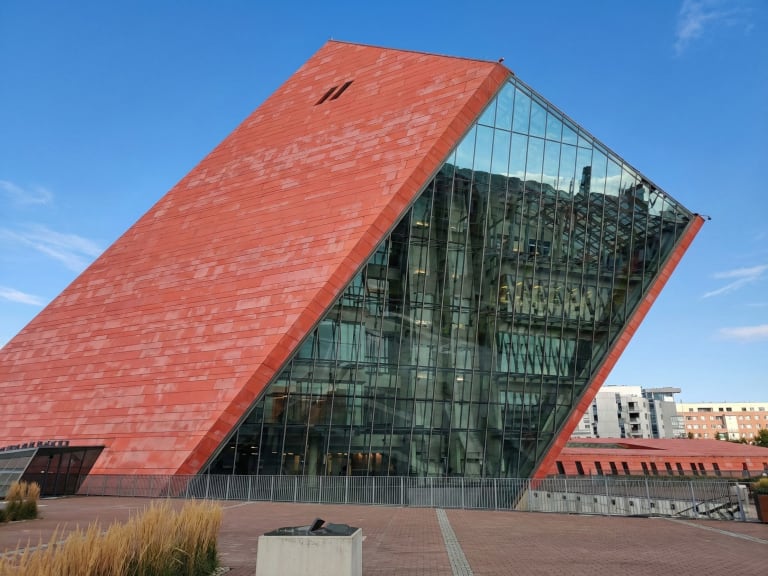
The Museum of the Second World War in Gdansk is one of the most important and comprehensive institutions dedicated to this global conflict. The museum was built on an emblematic site near the port of Gdansk, where the first steps towards the outbreak of war in 1939 were taken. Its architectural design, evoking the shape of a battlefield, symbolises the complexity and devastating impact that the war had on Poland.
Through its exhibitions, the museum seeks to offer a broad and nuanced view of the events that marked the Second World War, not only from the perspective of the great leaders and battles, but also from the everyday experience of the people affected.
Inside the museum, you will find a collection of objects, documents, and accounts that tell the story of the conflict from its beginning to its conclusion. The exhibitions include multimedia material, photographs, and testimonies from survivors that provide a moving and personal view of the war. One of the most impactful sections is dedicated to the horrors of the Holocaust.
The Museum of the Second World War also focuses on Poland's role during the conflict, highlighting how the German invasion and Soviet occupation affected the country and its people. Through careful curation, the museum invites visitors to reflect on the Polish resistance, the experiences of prisoners, and the impact of the war on national identity.
4. Learn about the Stutthof concentration camp

The Stutthof concentration camp, located approximately 34 kilometres from Gdansk, is a place that holds a deep and painful history. Created in 1939, this camp was the first built by the Nazis in Poland and operated until May 1945. Originally designed as a forced labour camp, Stutthof quickly became a place of imprisonment for thousands of prisoners.
Booking a tour of the Stutthof concentration camp from Gdansk is a moving and educational experience. The site has been transformed into a museum that offers visitors the opportunity to learn about the history of the camp and the horrors of the Holocaust. Here, you can tour the original facilities, including the barracks, torture chamber, and gas chamber, which remain intact.
Throughout its existence, it is estimated that more than 110,000 people passed through the camp, and it is estimated that around 65,000 of them died due to inhumane conditions, forced labour, and brutal executions.
One of the most moving aspects of Stutthof is its memorial, which pays tribute to the victims of the camp. This memorial space includes monuments and statues representing the suffering and resistance of those who were imprisoned. In addition, the museum houses exhibitions featuring documents, photographs and testimonies from survivors, providing a deeper insight into daily life within the camp.
5. Discover Westerplatte

Westerplatte is a site of great historical importance as it is known as the place where World War II began. On 1 September 1939, German forces bombarded the fortress on the Westerplatte peninsula, which housed a small Polish garrison, and this attack marked the beginning of the conflict in Europe.
Today, Westerplatte has become a memorial and tourist site that attracts visitors from all over the world. The peninsula has a number of monuments and sculptures that pay tribute to the brave soldiers who defended the position, and one of the most iconic structures is the Monument to the Defenders of Westerplatte, which depicts a Polish soldier resisting the German onslaught.
In addition to the monuments, Westerplatte offers views of the Baltic Sea and the city of Gdansk. Here you will find trails that run along the peninsula, where you can enjoy the natural landscape and explore the ruins of the old military installations that still remain in the area. The site also houses a museum that presents the history of the battle and the broader context of the Second World War.
6. See Gdansk from above on the Amber Sky Ferris wheel

If you want to discover a complete view of the city skyline from above, don't miss the Amber Sky Ferris wheel. At over 50 metres high, this attraction has become a modern symbol of Gdansk's urban landscape. Located near the port, it offers panoramic views of the old town, the Motlawa River and the surrounding area, creating the perfect setting to enjoy the architectural beauty of the region.
Riding the Amber Sky Ferris wheel is an exciting experience that attracts both locals and visitors. The glass capsules are designed for comfort and safety, allowing passengers to enjoy an unobstructed view. During the ascent, you can admire the colourful historic buildings and St. Mary's Basilica. What's more, if you go up at sunset, you'll see the sky tinged with golden and orange hues.
The Ferris wheel's strategic location also makes it an ideal starting point for exploring other nearby attractions. A short walk away is Gdansk's old town, with its rich history and a variety of shops, cafés and restaurants, and the Museum of the Second World War.
In the area surrounding the Ferris wheel , you will also find some of Gdansk's best pubs, which you can visit on your own or as part of a guided tour.
7. Take in the views of the Baltic Sea from Jelitkowo Beach

Jelitkowo Beach, located on the Baltic Sea coast, is one of Gdansk's most popular destinations for those seeking to enjoy natural beauty and ocean views. This golden sandy beach, surrounded by dunes and pine forests, offers the perfect place to relax, stroll and enjoy outdoor activities.
The Baltic Sea, for its part, has had a significant influence on the history and development of Gdansk. Since medieval times, the city has been built around its commercial port, and its proximity to the sea has facilitated trade and navigation. Gdansk, which was part of the Hanseatic League, benefited greatly from its access to maritime routes, becoming a thriving centre of cultural and economic exchange.
In Jelitkowo, you can enjoy a variety of sea-related activities, such as swimming, kayaking, windsurfing and paddle surfing, allowing you to make the most of the beauty of the Baltic Sea. In addition, the beach has promenades that are ideal for walking, cycling and family activities.
8. Relax in Oliwski Park

Oliwski Park is an oasis of tranquillity and natural beauty that encourages visitors to relax and enjoy their surroundings. This historic park is designed in a landscape style and covers more than 100 hectares, offering a mix of formal gardens, wooded areas and serene ponds.
The winding paths and wide meadows make Oliwski Park a perfect place for walking, picnicking or simply enjoying nature away from the hustle and bustle of the city. It is also a perfect place to rest between excursions or to explore by booking a bike tour in Gdansk.
In this park, you will also find the Rose Garden, where you can admire a variety of roses in full bloom, especially during the summer months. In addition, the park has ponds where you can watch ducks and other water birds, and throughout the year, Oliwski Park also offers cultural events and outdoor concerts.
Near Oliwski Park, you can explore Oliwa Palace and the Amber Museum, a material that has had a deep connection with the city since medieval times.
9. Visit Malbork Castle

Malbork Castle is one of the largest Gothic castles in Europe and has witnessed numerous historical events, from its role in the defence of Christianity to its participation in the Thirty Years' War and the history of Poland. Today, it is not only an architectural landmark, but also houses a museum that offers a comprehensive look at the region's medieval past.
At Malbork Castle, you can visit the walls, towers and courtyards of the building, which have been restored and preserved to reflect their original splendour. The complex includes several sections, such as the High Palace, where you can find rooms decorated with medieval craftsmanship and exhibitions on the life of the Teutonic Order, which financed the original construction of the castle.
The castle's architecture is undoubtedly one of the main reasons to visit it. Its Gothic design, with terracotta bricks and elaborate details, reflects the mastery of the architects of the time. However, the interior exhibition is also very interesting and houses a collection of historical items, such as armour, weapons and objects that will give you an insight into everyday life during the Middle Ages.
10. Walk along Mariacka Street

If you want to visit one of the most iconic and picturesque streets in Gdansk, you should walk along Mariacka Street, famous for its history and vibrant commercial atmosphere. This cobbled street, which connects St. Mary's Basilica with the port, is popular for its colourful Gothic and Renaissance-style houses, which reflect the city's rich architectural heritage.
Over the centuries, Mariacka has been an important meeting place for merchants and travellers, and today it remains a lively spot where visitors can experience the essence of enigmatic Gdansk and find craft shops and art galleries displaying local products and unique souvenirs.
One of the most notable attractions of the city and Mariacka is the production of amber. On this street, you can find jewellery and objects handmade from this material. In addition, this thoroughfare is dotted with cafés and restaurants where you can enjoy Polish cuisine and local culture.